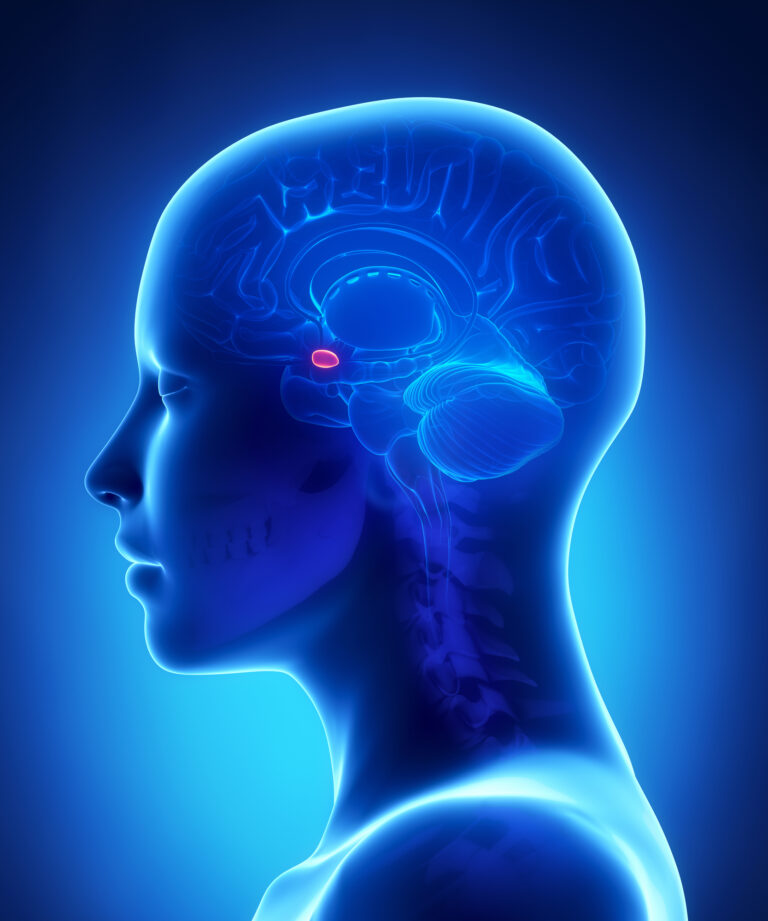
Pituitary Tumors
Most pituitary tumors are noncancerous. Some cause no symptoms, while others may lead to hormone imbalances or pressure on surrounding structures, such as the optic nerves. This may result in headaches or changes in vision.
Acromegaly
Acromegaly is caused by a pituitary tumor producing excess growth hormone. It may result in enlarged hands and feet, joint pain, and gradual changes in facial features. Early treatment helps prevent long-term complications.
Cushing’s Disease
Cushing’s disease occurs when a pituitary tumor triggers overproduction of cortisol. Symptoms may include weight gain, easy bruising, fatigue, high blood pressure, and mood changes.
Prolactinomas
Prolactin-producing tumors increase prolactin levels, which may cause irregular menstrual cycles, infertility, or unexpected milk production in individuals who are not pregnant or breastfeeding.
Vasopressin Deficiency (Central Diabetes Insipidus)
This occurs when the pituitary does not produce enough vasopressin, a hormone that regulates water balance. Symptoms include excessive thirst and frequent urination. Treatment involves hormone replacement therapy.
Pituitary Hormone Deficiency
If the pituitary does not produce enough hormones, symptoms may include fatigue, weakness, low blood pressure, or slowed metabolism. Treatment involves hormone replacement tailored to the specific deficiency.